


Page 38 - 2015_Cabin Days curriculum booklet
P. 38
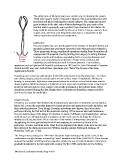
The application of blister plasters was another way of cleansing the system.
                        These were usually made of mustard or Spanish flies (cantharides) that were
                        powdered and mixed with liquids to make a plaster. The compound caused
                        great irritation to the skin; when blisters discharged the pus, much of the
                        harmful matter supposedly was expelled. Once cleansed of its irritants, the
                        body could be restored to health by the use of tonics. Arsenic, mercury, lime,
                        copper, iron, and nitric acid frequently were used as components of the
                        various restorative solutions and compounds.

                        SURGERY
                        Because surgery also was handicapped by the absence of the germ theory and
                        anesthesia, physicians performed operations only when necessity demanded.
                        Those physicians facing complicated operations usually found themselves ill-
                        equipped and ill-prepared, thereby limiting their surgery to setting fractures,
                        treating wounds and luxations, amputating limbs, removing abscesses and
                        tumors, relieving hydrocele (collection of water in the scrotum), and
                        trephining or perforating the skull to remove pressure. Extraordinary
operations such as Ephraim McDowell's ovariotomy in 1819 and Dr. John Richmond's Caesarian
section in 1827 were rare; both of these operations were "firsts" for doctors of the trans-
Appalachian frontier.

Operating upon conscious patients also limited the surgery performed by physicians. To reduce
pain during surgery, patients recited psalms or took opium, water of nightshade, whiskey or
brandy; in some cases, tight straps were placed above the incision, or loud noises were used to
divert attention. With the absence of hospitals in rural areas and insufficient room at the doctor's
house for full care and recovery, surgery was usually performed at the patient's home. Most
operations occurred during the day, though when circumstances demanded, surgery could be
performed at night by candlelight.

OBSTETRICS
Obstetrics was another field hindered by the physician's ignorance of anesthesia and antiseptics.
Moreover, it was still somewhat limited by female prudery and opposition to male midwives and
their orthodox practices. Even though Caesarian operations were known, they were rarely
performed during the first half of the nineteenth century. Of the women who had Caesareans,
few survived because of the danger of infection. In cases of difficult or protracted labor, various
methods such as embryotomy and amputation in utero were used to facilitate the delivery,
thereby sacrificing the child's life to save that of the mother. Embryotomy consisted of
decapitating the fetus, perforating the skull and emptying its contents by the use of the
perforator, crotchet, and blunt hook. Other doctors amputated the limbs of the fetus in utero and
then delivered the child piecemeal (see William Lindsay journal, Richmond, Indiana, 30
November 1839, pp. 11-26).

The forceps were perfected in 1740 when Benjamin Pugh introduced the pelvic curve to the
cumbersome straight forceps invented by Peter Chamberlen the Elder (1560-1631). Since forceps
reduced the number of embryotomies, prejudice against the use of male midwives or physicians
gradually dissipated in the late eighteenth century. By the 1840s, parturition (or the birthing

 Medicine of Jacksonian America Page 4 of 8

